
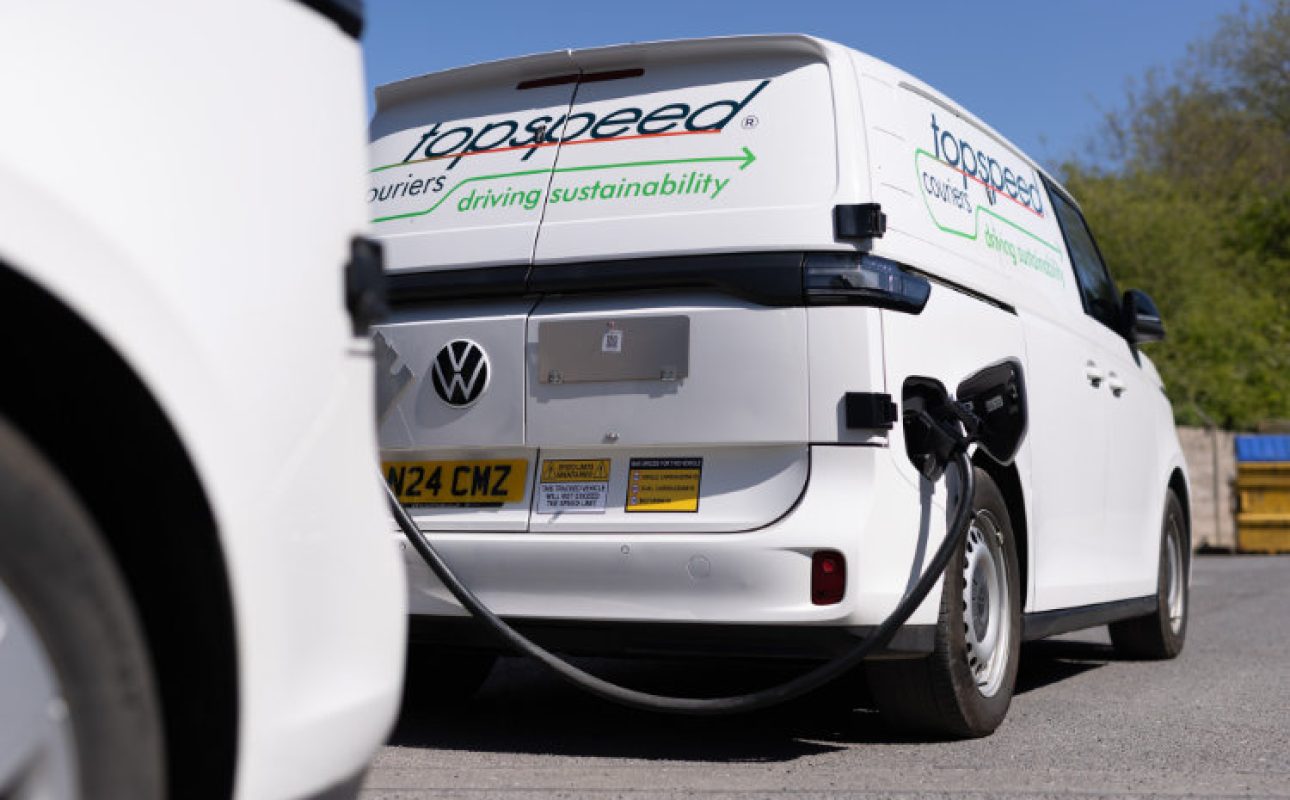
With the UK experiencing a series of unusually hot spells this summer, we’ve been putting our electric vans through their paces in conditions that are very different from the cooler temperatures we’re more accustomed to.
For a courier and logistics business, vehicle performance must be reliable whatever the weather. So, has the summer heat created challenges for our electric fleet, or have our EVs performed better?
The answer from our experience this summer has been surprisingly positive.
Better range in warmer weather
One of the biggest benefits we’ve noticed across our electric vehicles has been improved range.
While extreme heat is sometimes assumed to reduce electric vehicle battery performance, our experience across the fleet this summer has been the opposite.
As Gillian Lockley, Managing Director at Topspeed Couriers, explains: “Most of our vehicles have achieved a noticeably greater range in the warmer weather.”
That makes a noticeable difference for a working courier fleet, where every additional mile of usable range provides greater flexibility when planning routes and managing a busy day of deliveries and collections.
Temperature can have an impact on electric vehicle efficiency, with cold weather generally presenting a greater challenge to battery performance than moderate or warm conditions. Air conditioning can of course use additional energy, but modern electric vehicles are designed to manage both battery and cabin temperatures efficiently.
Our early efficiency data supports what drivers have been experiencing on the road. Although we only began recording miles per kWh in March, performance has generally strengthened as the weather has warmed. After figures of 2.18 in March and 1.90 in April, efficiency rose to 2.69 in May, remained steady at 2.68 in June and reached 2.86 miles per kWh in July.
Keeping drivers comfortable without compromising the working day
Another advantage of our electric vans during the recent heatwaves has been the ability to pre-condition the cab.
All our electric vans have the option to preheat or precool the cab area before the driver sets off.
This means drivers don’t necessarily have to start their working day by getting into an extremely hot cab and waiting for the air conditioning to bring the temperature down. The vehicle can be prepared in advance, helping create a more comfortable working environment from the moment the journey begins.
For professional drivers spending much of their working day behind the wheel, this is more than just a convenience. Driver comfort is an important part of operating a reliable and productive fleet, particularly when temperatures rise.
Has the heat meant more charging?
Interestingly, increased temperatures haven’t resulted in the additional charging requirements we might have expected.
Although using air conditioning does require energy, the improved efficiency and range we’ve seen across most of the electric vans this summer has more than balanced that out in our day-to-day experience.
The important point for Topspeed is that our electric fleet is being assessed based on real-world operational performance, rather than simply manufacturer range figures.
Our vehicles are working on genuine delivery and collection routes, carrying real loads and operating throughout the working day. That gives us a much better understanding of how electric vans perform as part of a commercial courier fleet.
Electric vehicles in the real world
The summer has provided another useful test for our growing electric fleet, and so far, the results have been encouraging.
We’ve seen better range across most of our electric vehicles, while features such as pre-conditioning have helped our drivers stay comfortable during some of the hottest days of the year.
It’s another example of why our approach to sustainability is about more than simply replacing diesel vehicles with electric alternatives. We’re continually monitoring how our vehicles perform in real operating conditions and using that experience to inform the development of our fleet.
As Topspeed continues to work towards its ambition of a fully electric fleet by 2027, experiences like this are helping us understand what works in practice, in all seasons and all types of weather.
For now, at least, the verdict from the summer heat is clear, our electric vans haven’t just coped with the heat, most have delivered better range because of it.